Your Trial Message

Uncategorized

Know Your Exigence

By Dr. Ken Broda Bahm: Generally speaking, the “exigence” refers to the needs or demands of a situation, as in “the exigences of city living.” However, within the fields of persuasive communication and rhetoric, the exigence has a more particular meaning. Theorist Lloyd Bitzer first applied that meaning in a 1968 piece called “The Rhetorical

Know Your Exigence Read More »
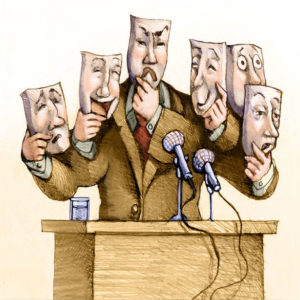
Beware of Paraleipsis (and Other Shady Rhetorical Strategies)

By Dr. Ken Broda Bahm: Just before Thanksgiving, the White House released a statement on U.S. policy toward Saudi Arabia in the wake of the brutal murder of U.S. journalist and Saudi expatriate Jamal Khashoggi. The short version of President Trump’s message? Nothing has changed. Despite the fact that Mr. Khashoggi was a permanent U.S. resident, a

Beware of Paraleipsis (and Other Shady Rhetorical Strategies) Read More »

Make Your Language More Personal and Less ‘Polite’

By Dr. Ken Broda Bahm: Defendants, and some plaintiffs, can have a source problem when it comes to legal persuasion. They’re already seen as morally questionable, and that makes whatever claims are coming from them already suspect. For defendants, they’re tainted because something bad happened and they’re “the accused.” And some plaintiffs also get that

Make Your Language More Personal and Less ‘Polite’ Read More »

Stay in Your Lane (But Own That Lane)

By Dr. Ken Broda Bahm: A few days ago, after the National Rifle Association got wind of a new issue of Annals of Internal Medicine which included several articles on gun control, the organization tweeted back at the doctors: “Someone should tell self-important anti-gun doctors to stay in their lane.” Once various other conservative commentators jumped aboard, the

Stay in Your Lane (But Own That Lane) Read More »

Use Present Tense

By Dr. Ken Broda Bahm: You know how the joke begins: “A guy walks into a bar…”  But wait, for you to know the punch line, this has to be past tense. So wouldn’t it be, “A guy walked into a bar…?” It could be. But usually it is “walks” – present tense. Why? Because

Use Present Tense Read More »

Being Useful to Jurors is No Accident (Tips for All Experts from an Accident Reconstructionist)

By Dr. Ken Broda Bahm: Experts have a tough job translating sometimes technical detail to lay audiences and working closely with a party to the litigation while still maintaining the role of “teacher” rather than “advocate.” Some excellent and wide-ranging advice on how to thread that needle comes in the form of a couple of

Being Useful to Jurors is No Accident (Tips for All Experts from an Accident Reconstructionist) Read More »

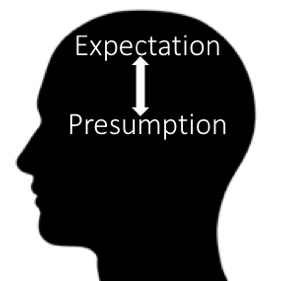
Voir Dire: Account for Both Presumptions and Expectations

By Dr. Ken Broda Bahm: A newly-published study about the effects of voir dire in capital cases suggests that social scientists and the courts may need to reconsider a long-held tenet. For at least the past 35 years, the belief has been that jurors exposed to the process of jury selection in capital cases, known as

Voir Dire: Account for Both Presumptions and Expectations Read More »