Your Trial Message

Bias

Don’t Let Anti-Lawyer Assumptions Keep You Out of the Courtroom

By Dr. Ken Broda Bahm: It’s an occupational hazard: If you’re a lawyer, then you’re going to hear lawyer jokes. One that I’m fond of is, “There is really only one lawyer joke…all of the rest are true.” That one was used successfully as an icebreaker in voir dire during a recent attorney malpractice defense.

Don’t Let Anti-Lawyer Assumptions Keep You Out of the Courtroom Read More »

Adapt to Moral Division (Not Just Political Division)

By Dr. Ken Broda Bahm: President Trump is doing great, keeping all his promises, even as he is beset with interference from dishonest investigations. He is also failing horribly, embracing  national callousness and international isolation while scandals drag his administration into chaos. Either can be treated as absolute truth, depending on who you’re talking to.

Adapt to Moral Division (Not Just Political Division) Read More »

Ask About Others

By Dr. Ken Broda Bahm: In voir dire, the whole point is to find out information about the potential juror. When you’re seeking out experiences or attitudes that you might use to warrant a strike or to mount a challenge for cause, you care about what that individual thinks, not about what anyone outside the courtroom

Ask About Others Read More »

Expect Obedience

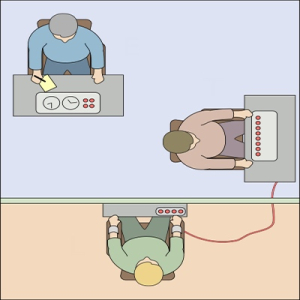
By Dr. Ken Broda Bahm: In the early Sixties as Adolf Eichmann’s Nazi war crimes trial was taking place in Jerusalem, the world was asking, was there something different about those who committed crimes on that scale, or were they just obeying orders? Just a few months later, a social scientist began a series of

Expect Obedience Read More »

To Address Implicit Bias, Rely on Rules Not Standards

By Dr. Ken Broda Bahm: In the first of Disney’s Pirates of the Caribbean movies, the heroine of the story is demanding to be taken back to shore and invoking something called “The Pirate Code” to make her case. The pirate, Captain Barbossa, responds: First, your return to shore was not part of our negotiations nor our

To Address Implicit Bias, Rely on Rules Not Standards Read More »